
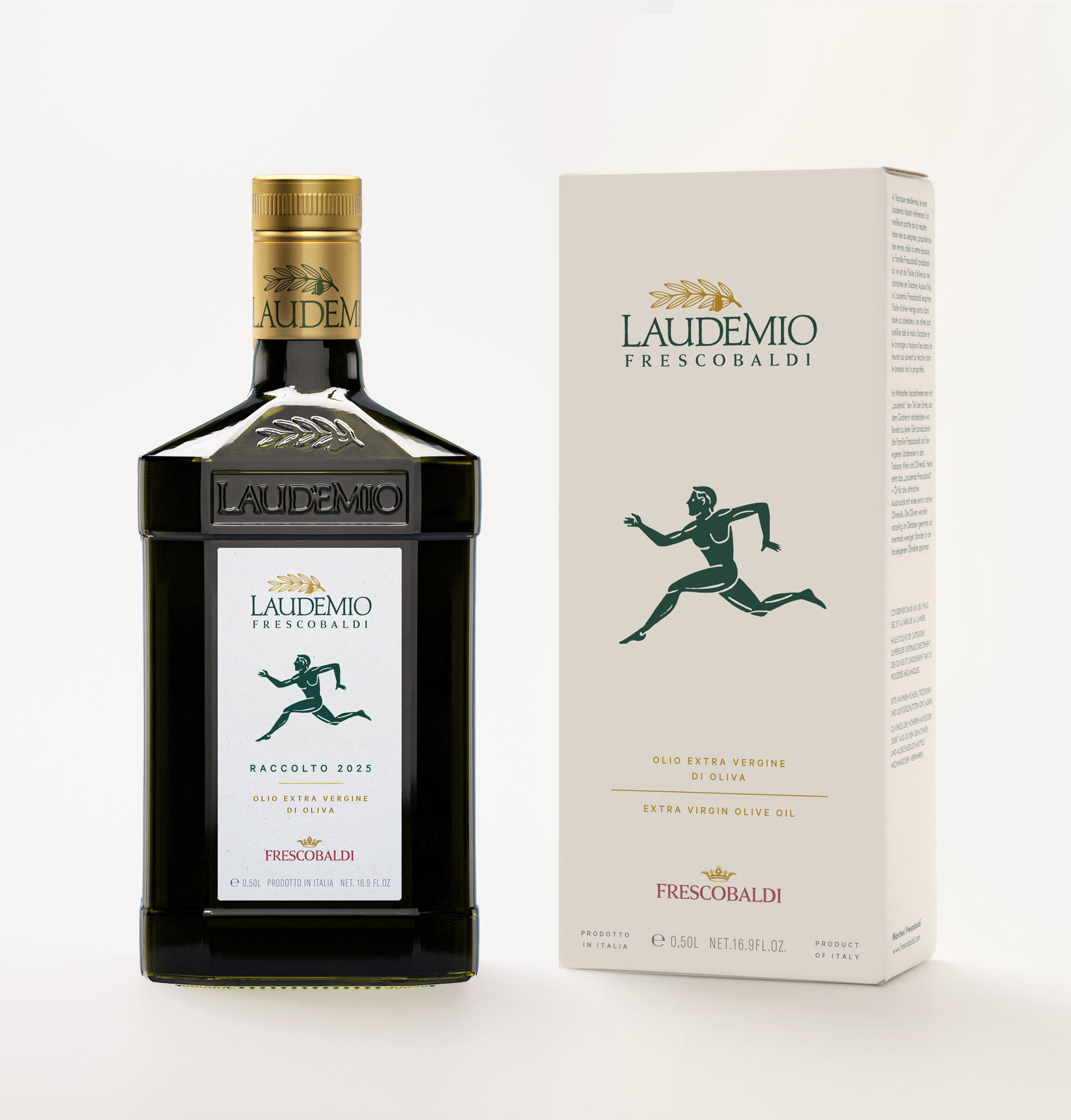
Standing in front of a shelf lined with olive oil bottles, choosing one may seem simple. But it becomes a more thoughtful decision when you take a closer look at the label. Between technical terms, origin statements, and marketing language, understanding what truly defines quality requires attention.
An extra virgin olive oil label is more than packaging, it tells the story of the product inside. Knowing how to read it helps you move beyond advertising claims, recognize genuine transparency, and choose an oil that reflects authenticity, terroir, and culinary tradition.
Extra Virgin Olive Oil Label: Why It Matters in Your Selection
The label is one of the most important tools consumers have. It provides essential information about the oil’s origin, category, and quality standards. In a market where words like “traditional” and “artisan” are often used loosely, the label remains the most reliable source of facts.
Careful reading allows you to separate mandatory information required by law from promotional language. What is printed in large font isn’t always the most meaningful detail — often, the smaller information reveals far more about the oil’s true value.
What an EVO Olive Oil Label Really Tells You
An extra virgin olive oil label tells the story of its origin and production identity. It indicates where the olives were grown, the product classification, and the bottling period — elements that directly affect freshness, aroma profile, and supply chain reliability.
Knowing the origin allows you to distinguish an oil made exclusively from Italian olives from blends sourced from multiple regions. The designation “extra virgin olive oil” also has a precise meaning: it identifies an oil obtained solely through mechanical processes, meeting strict chemical and sensory standards that certify its superior quality compared to other edible fats.
Mandatory Information on an EVO Olive Oil Label
Both European and U.S. regulations require specific information to appear on olive oil labels. These details guarantee transparency, traceability, and consumer protection.
Here’s what you should always find:
- Product designation and category: The label must clearly state “extra virgin olive oil.” This confirms the oil was produced exclusively through mechanical extraction, has no sensory defects, and meets strict acidity limits.
- Origin of the olives and place of production: The label must indicate whether the olives come from a single country or a blend of EU and/or non-EU countries. This helps you understand the oil’s geographic identity and production chain. Laudemio stands apart from many commercial oils by specifying on the back label: “Produced from Italian olives in our own mill in Pelago.” This level of transparency reinforces traceability and craftsmanship.
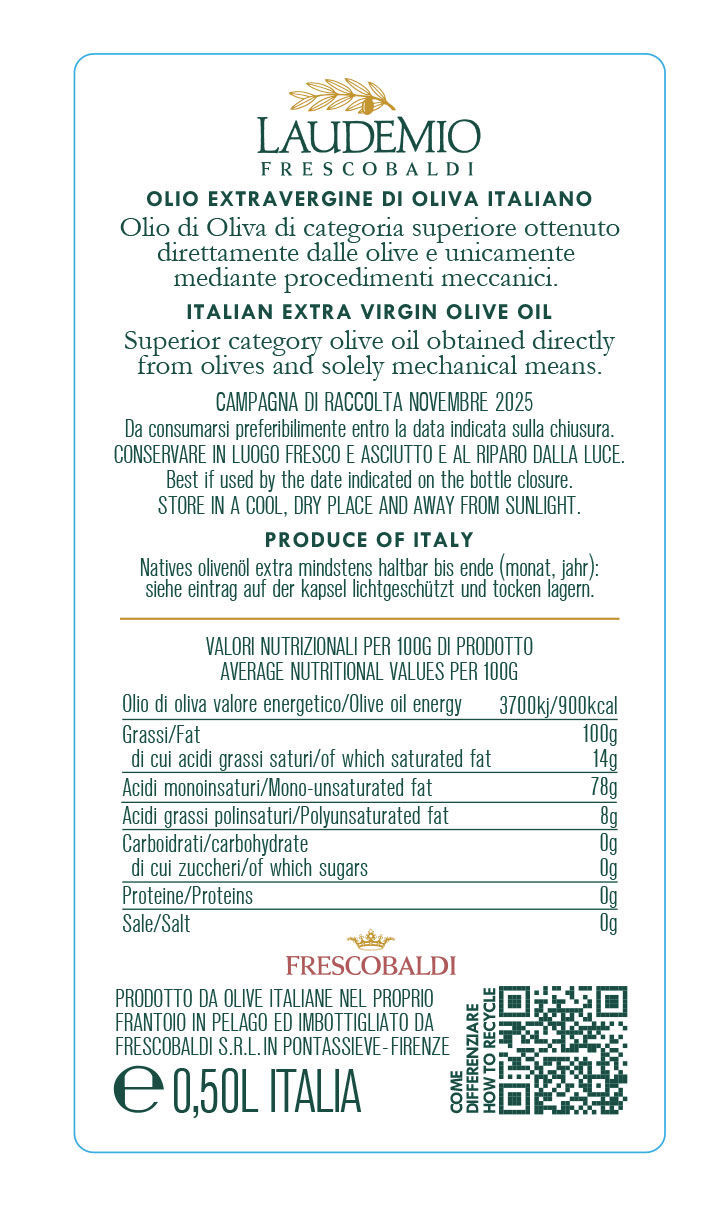
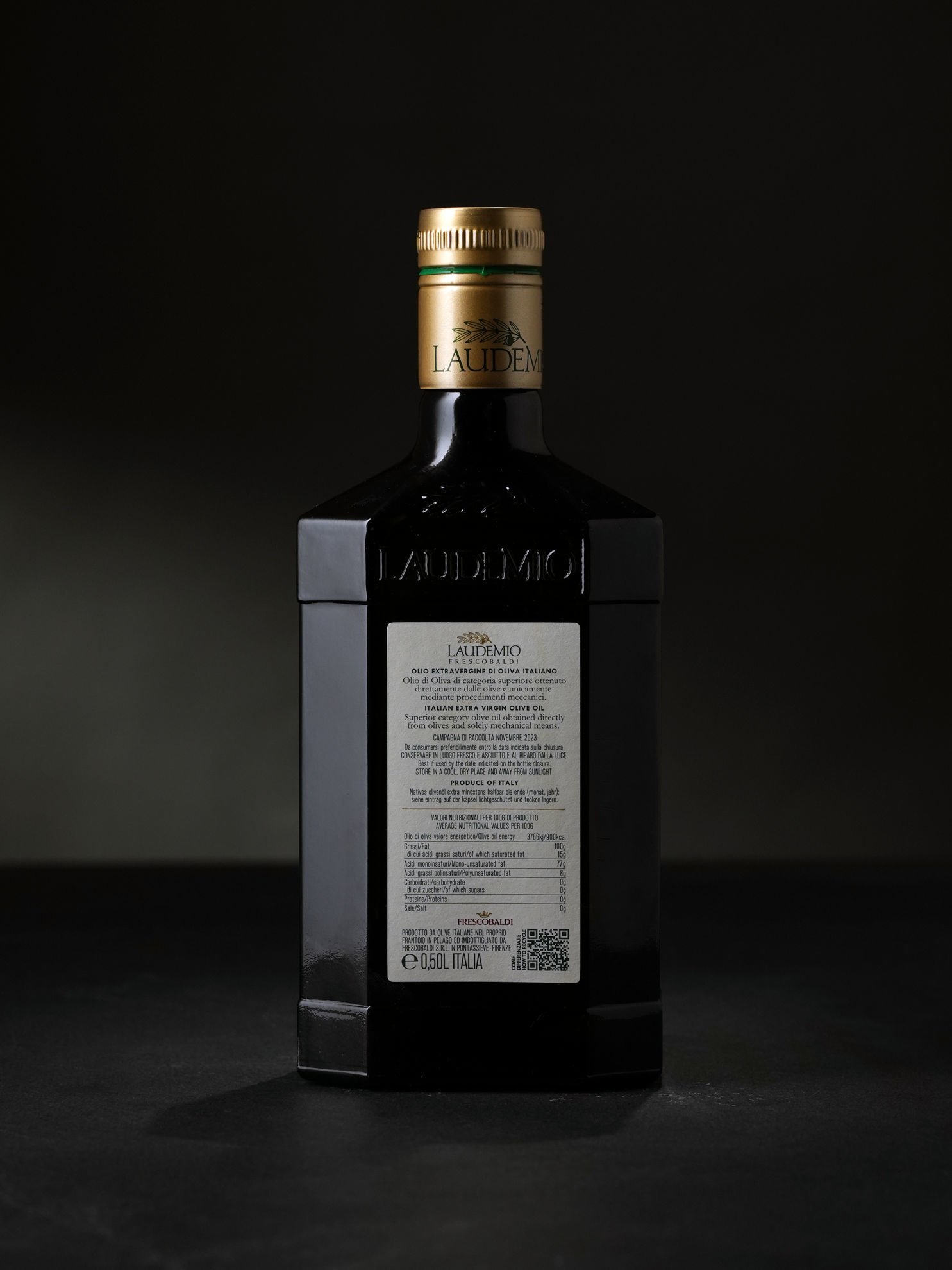
- Lot number: The lot number identifies a specific production batch and ensures full traceability in the event of quality checks.
- Best before date: Marked as “best before,” this indicates how long the oil will maintain its optimal flavor and aroma when stored properly. It is not a strict expiration date, but a quality reference.
- Net quantity: Displayed in liters or milliliters, allowing clear comparison between bottle sizes.
Olive Oil Bottle Label: Voluntary Details Worth Knowing
In addition to legal requirements, many labels include voluntary information that, when properly understood, can provide further insight into quality.
These may include:
- Extraction method: Phrases such as “cold extracted” indicate processing at controlled temperatures, helping preserve aroma and nutritional value. Such claims must comply with precise technical standards.
- Tasting notes: Some producers describe the oil’s sensory profile, evoking grassy aromas or notes of artichoke, almond, or green tomato. These descriptions help imagine the tasting experience, though they remain interpretive rather than official certifications.
- Culinary pairing suggestions: Usage recommendations transform the label into both an informational and cultural tool, guiding consumers in enhancing dishes with the right oil.
Nutritional Values on an Extra Virgin Olive Oil Label
A nutrition facts panel is not always mandatory for extra virgin olive oil, but when present, it provides a clear overview of its energy and nutritional profile. Extra virgin olive oil is composed primarily of fats, with a predominance of monounsaturated fatty acids, recognized for their role in a balanced diet.
In the extra virgin olive oil nutrition label, you will find information about:
- Total fat content, primarily monounsaturated
- Caloric value
- Vitamin E content, naturally present and known for its antioxidant properties
The quality of an olive oil lies in the composition and balance of its components, making it essential to prioritize oils of true excellence.
Conclusion: How to Read an Extra Virgin Olive Oil Label to Select Quality with Confidence
Interpreting an extra virgin olive oil label is both a cultural and culinary choice. It is not simply about selecting a condiment, but about choosing a product that expresses territory, agricultural tradition, and a commitment to quality.
This philosophy is embodied in the excellence of Laudemio Frescobaldi, where every stage of production — from olive selection to milling — contributes to creating an oil that represents the highest expression of its land and sustainable agricultural practices.
The next time you pick up a bottle, take a moment to read the label. You will discover a story of care, expertise, and authentic quality.
Choosing a high-level extra virgin olive oil means enhancing every dish with character and identity: discover Laudemio Frescobaldi and bring excellence to your table.